Most “how to choose a branding agency” guides tell you the same thing.
Check their portfolio. Google them. Ask for references. Go with your gut.
That’s not bad advice. But it’s not enough either.
Choosing a branding agency is one of the biggest marketing decisions you’ll make.
Get it right and your business looks, feels, and performs differently.
Get it wrong and you’ve spent five figures on something that looks better but changes nothing.
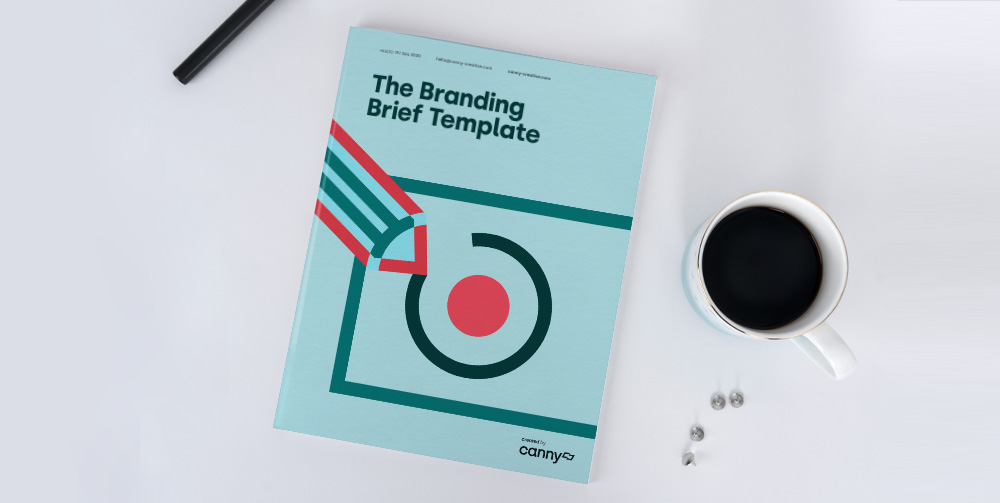
The Branding Brief Template
The Branding Brief Template is a free template that will help you get the brief for your branding project right. Wheth...
The stakes are high. The options are overwhelming. And most agencies will tell you exactly what you want to hear.
So here’s what this guide does differently.
It tells you what to actually look for. What questions to ask that most people never think of. What red flags to run from. And why the thing most buyers use to make their final decision (price) is the one thing that should matter least.
Let’s get into it.

Get Clear on What You Actually Need First
Before you look at a single agency, you need to answer one question.
What problem are you actually trying to solve?
Not “we need a new logo.” Not “our website looks outdated.” Those are symptoms. The real problem sits underneath them.
When a new client comes to us at Canny, we don’t dive straight into design. The first thing we ask is: “What’s really going on behind the scenes? Tell us the real problems.”
And when people open up, it’s almost always one of two things.
Either:
“We just look and sound dated. We did the brand work a few years ago and it’s tired.”
Or:
“It’s inconsistent. The sales team are spinning up their own materials, the guidelines aren’t followed, it’s hard to apply. We need to get it in line.”
But underneath both of those, the real problem is usually the same.
Competitors are eating their lunch.
They look newer, fresher, more dynamic. And somewhere along the way, the business stopped standing out.
Once we understand that, we ask to see the data. Strategy documents, brand guidelines, analytics. We try to build up a full picture before we recommend anything.
Sometimes what looks like a branding problem is actually a messaging problem. There’s a simple test for that.
Go to your website right now. Within five seconds, can you answer three questions?
- Who do you do it for?
- What do you do?
- Why should they want it?
If you can’t, you’ve found the problem.
The best agencies will help you do this diagnosis. But walking in with some version of the answer already puts you in a much stronger position.
Not sure where to start? Our branding brief template will help you get your thinking straight before you talk to anyone.
Know the problem first. Then find the agency that can solve it.

Where to Actually Find a Good Branding Agency
The honest answer? It’s changed.
A few years ago, Google was where most people started. Type in “branding agency,” browse the results, shortlist a few. It still works. But it’s no longer the first stop.
Right now, the best leads tend to come from three places.
AI Search
More and more marketing managers are using ChatGPT or similar tools to do their initial research. And what’s interesting is how it changes the conversation.
When someone finds Canny through AI search, they arrive differently. They’ve already poked around, asked questions, explored options. By the time they reach out, they’re primed. The conversation starts bigger, warmer, and more ready to go. Almost like a referral from a trusted friend.
Referrals
Speaking of which — referrals are still the gold standard.
But not just any referral.
If someone in your network has been through a similar branding project and came out the other side happy, that recommendation is worth more than ten Google results. The key word is similar.
Same sector helps. Same challenges is better.
A B2C packaging agency recommended by your mate in consumer goods is useless to you as a B2B marketing manager. You want someone who’s worked with businesses facing the same problems you’re facing. Inconsistent brand, dated positioning, competitors pulling ahead.
Find that person. Ask who they used. Ask what the experience was actually like.
That conversation will tell you more than any agency’s website ever will.
Events
This one is underused and underrated.
Go to events. Get in the room with people. Have a real conversation about your problems, not a polished Zoom call where everyone’s on their best behaviour.
At Canny, some of our best client relationships started at events. Not because we were pitching. Because we were there, talking honestly about the things that matter, and people got a feel for what we’re actually like.
You can do the same in reverse. Meet agencies at events. See how they talk, how they listen, how they think. It tells you more in twenty minutes than a credentials deck ever will.
And LinkedIn?
You can always post on LinkedIn if you want 100 people claiming they own the best agency in the world and can service your every need.
If you believe any of that… I have some magic beans to sell you.

Making Contact
You’ve got a shortlist. Now it’s time to reach out.
Do it by email. Not a call, not a LinkedIn message. Email.
Agency environments are busy. Calling unannounced means you’re either not getting through, or interrupting someone mid-thought. Neither is a great start to a relationship.
Email gives both sides space. And it gives you the chance to make a proper first impression.
The Difference Between a Good Email and a Bad One
A bad email looks like this:
“Hi, we want to talk about our project. Can we arrange a call?”
That goes to the bottom of the pile. Every time.
A good email looks like this:
“Hi, I’m the Marketing Manager at X. We’re considering rebranding because we’ve outgrown our current positioning and competitors are pulling ahead. Would love to have a chat about whether you’d be a good fit.”
It doesn’t have to be a full branding brief.
But some context, who you are, what you’re trying to do, and why, gets the agency thinking before they’ve even replied.
What to Read Into How They Respond
A good agency doesn’t just reply. They do the work.
When we get a well-written email at Canny, we’re straight onto the prospect’s site. We pull search data, look at what’s working and what isn’t, and share some of that thinking in our response.
If an agency is doing that before the relationship has even started, it’s a sign of good things to come.
If you get back a generic “thanks for reaching out, please book a meeting here” that’s the same response they send to everyone. Same as the other hundred agencies in their inbox.
Before the Discovery Call
If you can, put together a short presentation before your Discovery Call. Nothing formal. Just some context about the business, what’s going on, and why you’ve reached out.
Share it with the agency beforehand if you can. It means the call starts further along, with both sides already thinking about the real problems rather than spending the first twenty minutes on introductions.
If you can’t pull that together, come ready to answer questions. A good agency will step you through it. But the more context you bring, the better the conversation will be.
What to Look for in Their Work
Every agency has a portfolio of work. Not every agency has proof.
There’s a difference.
A portfolio shows you what they made. Proof shows you what happened as a result.
When you’re looking through an agency’s case studies, ignore the pretty pictures for a moment. Look for the before and after. Look for real numbers. Look for context.
The difference between a weak case study and a strong one is this:
Weak: “We implemented a hot pink brand identity to help them stand out in a sea of blue.”
Strong: “Beforehand, the client was invisible at trade shows. By implementing hot pink, trade show enquiries increased by 15%.”
Same project. Completely different level of proof.
If the case studies are full of adjectives and empty of data, treat it as a red flag.
Real Clients vs Studio Work
Some agencies pad their portfolios with self-initiated projects. Work they made for fictional or invented brands, just to fill the space.
There’s nothing inherently wrong with that, if they’re honest about it and can explain the problem they were trying to solve. But if it’s just there to make things look pretty, that tells you something.
A quick check: search for the companies featured in their portfolio. Are they real? Do they actually exist? If you can’t find them, ask.
Look for Focus
A portfolio full of completely random projects is a warning sign.
Consumer brands next to tech companies next to recruitment firms next to hospitality. No thread. No focus.
There’s a big difference between an agency that works across everything and an agency that knows where they do their best work. The best agencies have some level of focus, even if they’re not hyper-specialist.
Ask yourself: does this agency seem to understand my world? Or are they just collecting projects?

The Questions Nobody Asks (But Should)
Most buyers go into agency meetings with the same questions.
What’s your process? How long will it take? What does it cost?
Those are fine. But they’re table stakes. Every agency has rehearsed answers to all of them.
The questions that actually tell you something are the ones most people never think to ask.
“Do You Think You Can Make a Genuine Difference Here?”
This one separates the agencies that want your work from the agencies that believe in it.
A bad agency will say yes to everything. They want every scrap of work they can get, so they’ll tell you what you want to hear regardless of whether they actually believe it.
A good agency will answer firmly and immediately. And they’ll have already framed the conversation around impact before you’ve even asked.
When someone asks us that at Canny, the answer is yes. Emphatically. Because we wouldn’t be in the room if we couldn’t. We don’t take on projects we don’t believe we can move the needle on.
If an agency hesitates, hedges, or pivots to talking about their process instead of your outcomes — pay attention to that.
“What Metrics and Data Should We Be Tracking for Brand?”
This tells you immediately whether the agency thinks commercially or just creatively.
The wrong answer is “brand awareness.” Not because it’s incorrect, but because it’s incomplete.
Brand awareness is up. Great.
But:
What does that mean for conversions? What does it mean for the bottom line? What’s the surrounding data telling you?
An agency that can’t answer those questions isn’t thinking about your business. They’re thinking about their own work.
If you want to know what good brand measurement actually looks like, we’ve put together a guide on the key metrics to track for brand.
“Who From Your Team Will Actually Be Working on Our Project?”
This matters more than most people realise.
Some agencies win work on the back of their senior team, then hand the project to junior staff once the contract is signed. It happens more than you’d think.
Ask directly. Get names. Find out who’s leading the project, who’s doing the work, and who your day to day contact will be.
“How Much Time Will You Need From Us, and at What Stages?”
A branding project isn’t something that happens to you. It happens with you.
The best outcomes come from clients who are involved, available, and engaged. A good agency will be honest about what that looks like and when they’ll need your time.
If an agency tells you they’ll handle everything and barely need you — be cautious. That’s either overconfidence or a sign they’re not planning to collaborate properly.
“What Are the Biggest Blockers That Tend to Push Deadlines Back?”
This question does two things.
It tells you how self aware the agency is about their own process. And it prepares you for the realities of the project before you’re in the middle of it.
The honest answer usually involves internal sign off delays, feedback that arrives too late, and stakeholders who weren’t aligned from the start. A good agency will tell you that directly. And it’ll make you a better client as a result.

The Price Trap
Here’s the thing about choosing a branding agency on price.
It’s not always wrong.
But it’s almost always the wrong starting point.
Most buyers look at two proposals, see a significant difference in cost, and assume the cheaper one is the risk. Sometimes it is. But sometimes the numbers aren’t even comparing the same thing.
First, Make Sure It’s Actually Apples to Apples
A London agency versus a North East agency is not a fair comparison. The overheads are completely different. The price difference doesn’t reflect the quality of the work, it reflects the postcode.
A three person agency versus a thirty person agency is not a fair comparison either. Different scale, different capacity, different resource.
- And even if everything else is equal, are the deliverables the same?
- Is one proposal including brand strategy, identity, application, and a website?
- Is the other just the visuals?
Before you look at the number, make sure you’re actually looking at the same thing.
Our complete list of branding deliverables is a useful sense check when comparing proposals.
What You’re Usually Paying for
Sometimes agencies charge more because of who they’ve worked with.
An agency with Slack, HubSpot, and Salesforce on their books is charging a premium. But they’ve also demonstrated they’ve got the chops to operate at that level. You’re paying for proven experience as much as anything else.
That might be worth it. Or it might be more than you need. Only you can decide that.
What Happens When You Go Cheap and It Goes Wrong
We’ve seen it.
Clients who’ve tried a cheaper rebrand, and either failed to roll it out, or rolled it out and felt nothing change.
The problem is almost always the same. They only looked at the visuals. Nobody looked at the underpinning strategy or messaging. So the brand looked better. But the business problems that existed before? Still there.
A cheap rebrand without strategy is just decoration. It might look better. But has it helped the organisation actually change or transform?
Most likely not.
A Note on Budget From Someone Who’s Watched Every Penny
I founded Canny Creative with nothing.
There were weeks early on where I was watching the numbers hoping there’d be enough at the end of it to provide for my family. So when it comes to budget, I’m not going to tell you to throw caution to the wind.
What I’ve learned, both as a founder and working with clients, is when to cut back and when to stretch. And I treat every client’s money like it’s my own.
So here’s the honest advice.
If the budget is slightly over, go for it. It’ll be fine.
If it’s well over, consider your options:
- Phase the project. Do the strategy and identity first, roll out the applications later.
- Cut a deliverable or two. Maybe you don’t need every touchpoint on day one.
- Ask for a discount. But do it properly. Let them know that if they deliver, you’ll be happy to do a video testimonial, leave reviews, and share the work. That’s genuinely valuable to an agency and goes a long way.
None of that is weakness. It’s just good sense.
If you want the full breakdown on what to expect to pay, we’ve written a separate guide on how much branding costs in the UK.
The Honest Conversation
When a buyer tells me they’re leaning toward a cheaper option, I don’t try to force it.
If you genuinely believe deep down that they’ll do the right job, go with them. But if you have any reservations at all, come back and talk to us.
Here’s my honest take on price as a deciding factor.
If it’s genuinely apples to apples, same deliverables, same scale, same feel, and you’ve done all the work this guide recommends? Then price can be the thing that decides it. That’s a completely rational decision.
But if you haven’t done that work yet, and price is the first filter you’re applying?
You’re doing it wrong.

Red Flags
Some red flags are obvious. Others look like green flags until you’re three months into a project and wondering what went wrong.
Here’s what to watch for.
They Don’t Want to Meet in Person
A branding project is a big relationship. Not just a transaction.
The best work happens when you’re in a room together, talking through the real problems, getting creative, building something together. That’s when you really get to know an agency. And that’s when the light starts to shine through the cracks. You get into the real problems.
An agency that’s resistant to meeting in person, or wants to handle everything over Zoom from day one, is worth questioning. Some of the most important moments in a project happen across a table, not a screen.
Big Names, Tiny Jobs
Watch out for agencies that lead with impressive client logos but can’t show you what they actually delivered.
Working with a household name sounds great. But did they design a full brand identity, or did they do one page of a brochure?
Look at the actual work they’re citing. And if you’re serious about an agency, get in touch with some of their clients directly. Ask what the experience was really like. Most people are happy to tell you.
They Send Closers to the Pitch
You know the type.
Sharp suits, slick hair, car salesman energy. They deliver a polished, generic pitch that feels like it could have been for anyone. Because it probably was.
The people in the room selling you the work should be the people who are going to do the work. At Canny, we spend hours on every proposal and pitch because we care about showing exactly what we’re thinking and how we’d approach your specific problem.
If the pitch feels like a performance rather than a conversation, ask who’ll actually be on your account. The answer will tell you everything.
Awards
Anyone can buy themselves an award.
“Best Agency in Ghost Town Nowhere” means nothing. And yet agencies plaster them everywhere.
What actually matters is results. Look for the metrics in the portfolio. Look for the case studies. Fact check them. Real outcomes for real businesses are worth a hundred trophies on a shelf.
They Say Yes to Everything
If an agency responds to your brief with enthusiasm for every single part of it, no pushback, no questions, no challenges — be cautious.
The best agencies will tell you when something doesn’t make sense. They’ll push back on a brief that isn’t right. They’ll tell you honestly if a project isn’t for them.
An agency that agrees with everything just wants the work.
How to Make the Final Call
You’ve done the work.
You’ve found the agencies. Asked the hard questions. Checked the portfolios properly. Spotted the red flags. Had the Discovery Call.
Ideally, after all of that, you’re down to one.
But if you’re down to two, then here’s a word of warning.
Don’t get dazzled by the pitch.
It reminds me of that How I Met Your Mother episode. Sven, Sven and Sven do this incredible, showstopping presentation. Everyone’s blown away. And then Ted gets the job anyway. Because when the dust settled, he was simply the right choice.
A brilliant pitch is a green flag. But it’s not the whole picture. Make sure you’re choosing the agency, not the performance.
On Gut Feel
Gut feel is a legitimate metric. But it only works after you’ve done the thinking.
If you’ve skipped straight to “it just felt right” without checking the portfolio, asking the hard questions, or comparing the deliverables properly, then that’s not gut feel. That’s just going with whoever you liked most in the room.
Do the work first. Then trust your gut.
If You’re Genuinely Torn
Sometimes there really isn’t much in it. If that’s where you are, work through these:
- Is one agency closer? Can they do more in person?
- How closely does each portfolio match your specific needs?
- Are the prices actually comparable once the deliverables are equal?
- Do the timelines stack up? Can you commit properly to one over the other?
- Did you like them both the same? Or is there a flicker of something pulling you one way?
If you’ve gone through all of that and you’re still stuck, go with your gut. You’ve earned it at that point.
What the Best Relationships Actually Look Like
The best client relationships we’ve had at Canny started with one kind of conversation.
“We want to build a relationship. We’re in this for the back and forth. Treat us like you’d treat your team and we’ll do the same.”
That vibe. Where nothing is off the table. Where you can go to each other with anything. Where it stops feeling like client and agency and starts feeling like the same team working toward the same thing.
That’s what we’re looking for at Canny.
And honestly? That’s what you should be looking for too. Not just in us. In whoever you choose.
Frequently Asked Questions
-
How much does a branding agency charge?
It depends on the scope, the size of the agency, and where they’re based. As a rough guide, any serious agency working on a full branding project should be quoting five figures minimum.
At Canny, brand strategy and identity starts from £10,000. Brand strategy, identity, and a website starts from £30,000. If you’re getting quotes well below that, ask hard questions about what’s actually included.
-
How long does a branding project take?
At a minimum, expect three to four months. More complex projects, particularly those involving a website build or significant rollout, will take longer. Any agency giving you a firm timeline before they’ve understood your project properly is guessing.
-
What's the difference between a branding agency, a creative agency, and a design agency?
Honestly, the lines are blurry and the names don’t matter as much as what they actually deliver. Branding agencies tend to handle strategy, identity, and application end to end. Creative agencies often do the same. Design agencies can mean anything from full brand projects to one-off graphic work. The question to ask isn’t what they call themselves. It’s what they actually do and what the outcomes look like.
-
Do I need to be near the agency geographically?
Not necessarily. Most serious branding projects can be managed remotely. But as we said earlier in this guide, in-person time matters. The best work tends to happen when you’re in a room together. If an agency is completely resistant to meeting face to face at any point, that’s worth noting.
-
What should I include in a branding brief?
At a minimum:
- Who you are
- What problem you’re trying to solve
- Who your audience is
- What success looks like
- Your budget range
- Your timeline.
You don’t need a perfect brief to start a conversation. But the more context you bring, the better that first conversation will be.
-
What's the difference between a brand refresh and a full rebrand?
A brand refresh updates and evolves what you already have. A full rebrand starts from scratch, usually including strategy, positioning, and identity. If your brand is broadly right but feels dated, a refresh might be enough. If the business has fundamentally changed, or the brand is actively working against you, a full rebrand is probably the right call. We’ve written a full guide on this if you’re not sure which you need.
-
How do I know if a branding project has worked?
This is the question most buyers forget to ask before the project starts. Good agencies will help you define what success looks like upfront. Track the metrics that surround brand awareness, not just awareness itself. Are you winning more of the right clients? Are conversion rates improving? Are you getting further in pitches? Is your sales team finding it easier to open doors? Those are the numbers that tell the real story.
Ready to Find Out if Canny’s is the Right Branding Agency For You?
You’ve read the guide. You know what to look for. You know the questions to ask.
So here’s ours, answered upfront.
We’re a B2B branding agency based in the North East of England.
We work with marketing managers, directors, and founders at companies who’ve outgrown their brand or need to perform better in a competitive market. Our average project is between £20,000 and £50,000. We meet in person where we can. We put the people who do the work in the room. And we only take on projects we genuinely believe we can make a difference on.
If that sounds like it could be a fit, let’s have a conversation.
No pitch. No closer. Just an honest chat about what’s going on with your brand and whether we’re the right people to help.