Salesforce Overview
Salesforce was founded on 8 March 1999 by Marc Benioff, a former Oracle executive, alongside Parker Harris, Dave Moellenhoff and Frank Dominguez, who began building the company’s browser-based CRM from a rented one-bedroom apartment at 1449 Montgomery Street on San Francisco’s Telegraph Hill. From the outset, the founders built the company around three ideas they considered breakthroughs at the time: delivering software entirely through the internet rather than installed on customer hardware, a subscription rather than licence-fee business model, and an integrated philanthropy model that would later become the ‘1-1-1’ pledge of giving 1% of equity, product and employee time to charitable causes.
Learn More Show Less
Salesforce’s early growth leaned heavily on guerrilla marketing rather than conventional advertising. In February 2000, Benioff sent employees to stage a fake protest outside a conference held by rival Siebel Systems at San Francisco’s Moscone Center, carrying signs reading ‘The Cloud Must Go On’ and chanting ‘The internet is really neat, software is obsolete’, complete with a hired fake news crew; Siebel called the police, and the resulting media coverage put the unknown startup on the map. Salesforce officially launched days later at an ‘End of Software’ event at San Francisco’s Regency Theater, where 1,500 guests were asked to throw old software discs into bins before descending into a theatrical ‘Software Hell’ and ascending to ‘Nirvana’, with a concert from The B-52s. Salesforce later repeated the guerrilla approach at Siebel’s Cannes conference by renting every airport taxi in Nice and using the 45-minute rides to pitch arriving executives.
Salesforce went public on the New York Stock Exchange on 23 June 2004 under the ticker CRM, pricing its IPO at $11 a share and raising $110 million at a valuation of over $1 billion. Growth continued through a strategy of major acquisitions, including ExactTarget, Demandware, MuleSoft, Tableau and, in 2021, Slack for $27.7 billion, its largest deal to date. By fiscal year 2026, Salesforce reported record annual revenue of $41.5 billion and around 83,000 employees, and the company is a component of both the Dow Jones Industrial Average and the S&P 500, ranking as the world’s number one CRM provider for over a decade running.
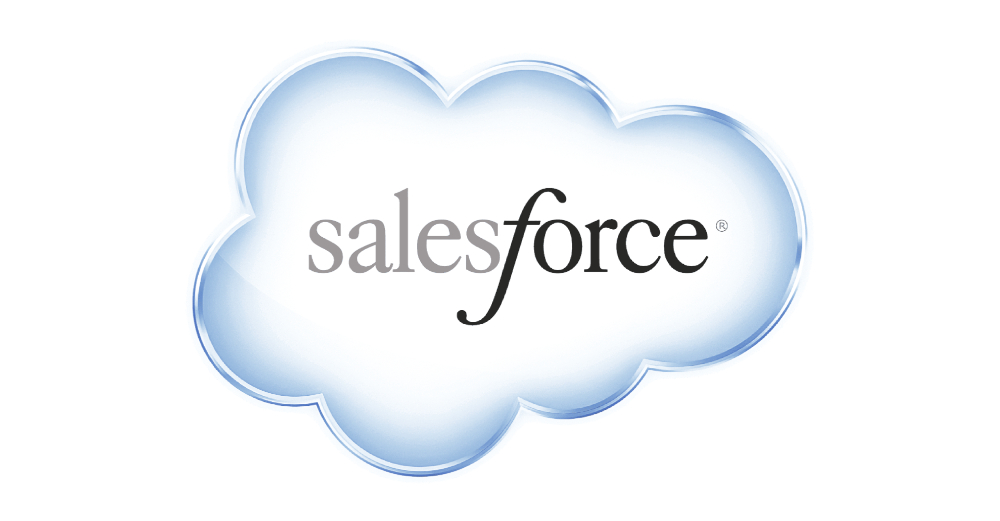
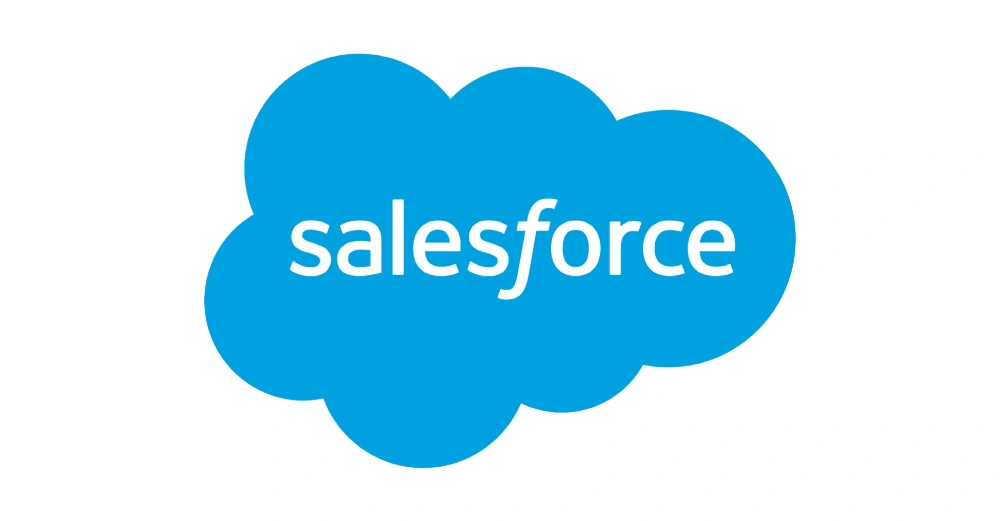
Visually, Salesforce has changed its logo only once in more than 25 years. The original 1999 mark set a white-to-blue gradient cloud around a serif ‘Salesforce’ wordmark split into a grey ‘Sales’ and black ‘force’, with only the dividing ‘f’ italicised, a deliberate nod to cloud computing at a time when the concept needed explaining. In 2014, Salesforce flattened the gradient into solid blue, switched the wordmark to white, and replaced the serif type with a cleaner sans-serif, modernising the mark for digital use while keeping the cloud shape and locked-in wordmark structure intact. In 2022, the company legally shortened its name from Salesforce.com, Inc. to Salesforce, Inc., aligning its corporate identity with how the brand had long been known.
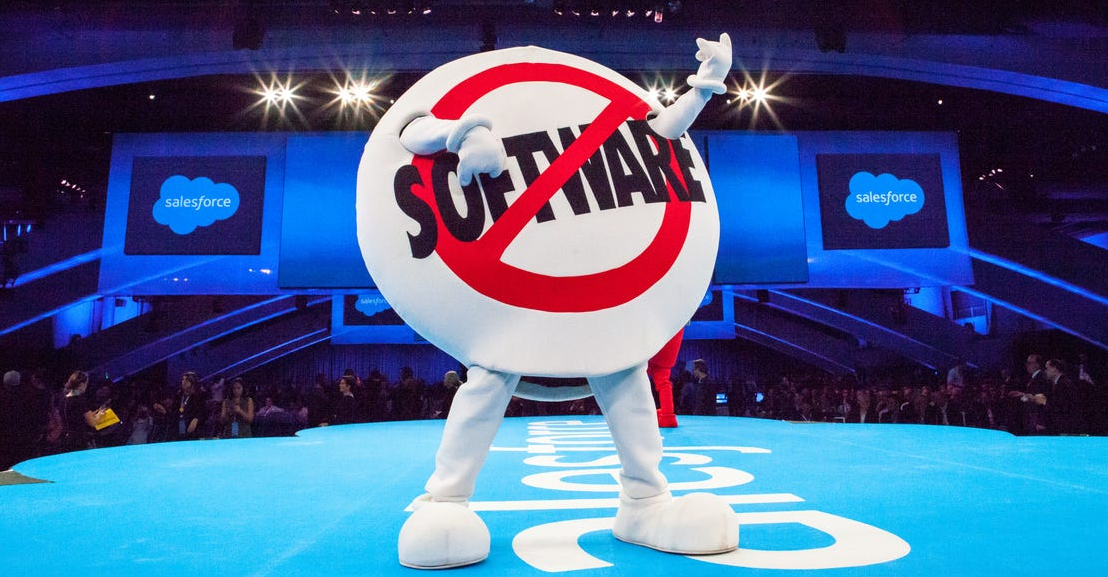
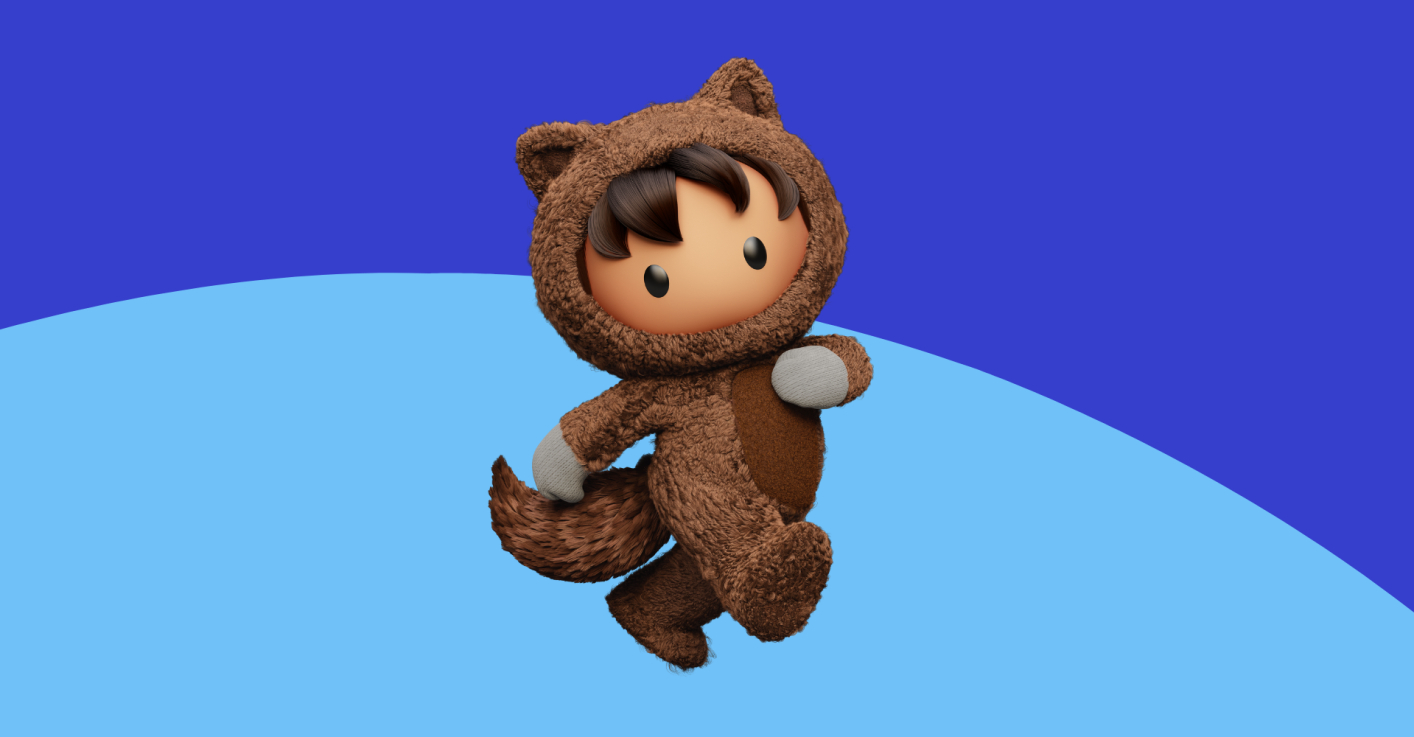
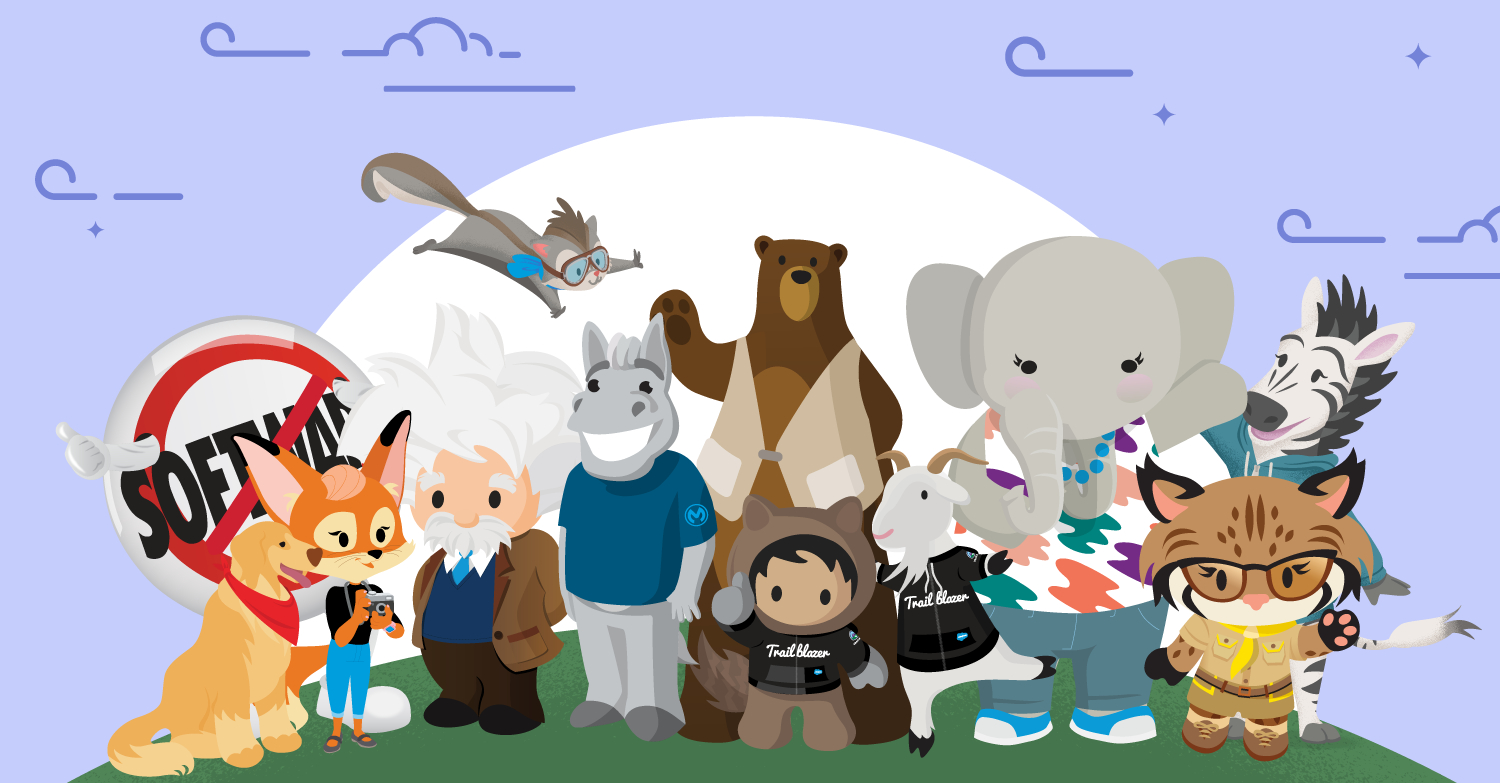
Where Salesforce has genuinely innovated is in its cast of mascots. SaaSy, the first character, was created around the company’s ‘NO SOFTWARE’ concept in the early 2000s: a simple circular body bearing the word ‘SOFTWARE’ struck through, with arms and legs, still made to appear at company events today. Astro Nomical, a tanuki-like space traveller, was created in 2014 for a Developer Marketing event tied to the launch of Trailhead, Salesforce’s free learning platform, and has since become the primary guide character across the brand; Astro is explicitly designed as non-binary, reflecting Salesforce’s stated diversity and inclusion values. Around Astro, Salesforce has built out a large family of role-specific characters, including Einstein (AI), Codey the Bear (developers), Cloudy the Goat (admins), Brandy the Fox (marketers), Ruth the Elephant (architects), Zig the Zebra (the Salesblazer community), Flo the Flying Squirrel (Salesforce Flow), Appy the Bobcat (partners) and Max the Mule (MuleSoft). One character, Koa the Dog, was based on a real dog belonging to founder Marc Benioff, informally the company’s ‘Chief Love Officer’, who lived to 17 and was later immortalised as an illustrated mascot.
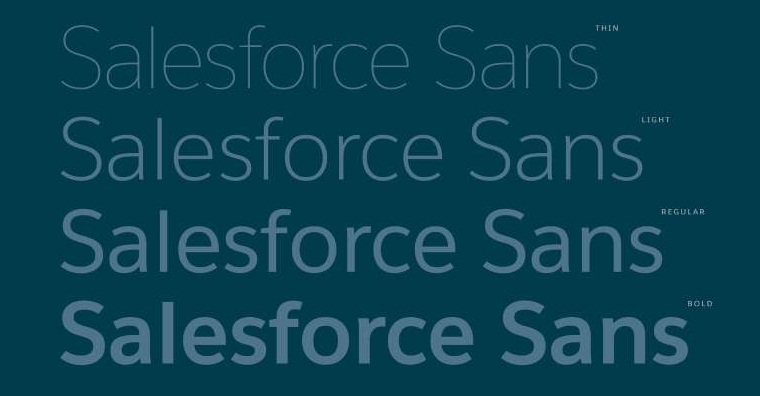
Typography follows the same restrained pattern as the rest of the identity. Salesforce Sans, a proprietary sans-serif, appears across marketing, product interfaces and the Salesforce Lightning Design System, chosen for legibility over character. The logo’s lettering resembles Aller, a clean sans-serif by Dalton Maag, giving the wordmark a friendly, approachable quality that supports the cloud shape rather than competing with it. Colour is deliberately minimal: Salesforce Blue (#00A1E0) and white are the only two brand colours specified in Salesforce’s own guidelines, chosen to signal trust and reliability rather than to stand out, with warmth and personality delivered instead through the character system.
Salesforce’s advertising has evolved from scrappy stunts into major celebrity-fronted campaigns while keeping a consistent register: optimistic, values-forward, and willing to use humour and metaphor to make enterprise software relatable. In February 2022, Salesforce named actor Matthew McConaughey its first brand partner and advisor, debuting the #TeamEarth campaign with ‘The New Frontier’ during the Winter Olympics and Super Bowl LVI, a sustainability-themed spot poking gentle fun at the billionaire space race. McConaughey has remained the face of the brand since, returning for Super Bowl LIX in February 2025 alongside Woody Harrelson in ‘Gate Expectations’, part of the ‘Agentforce: What AI Was Meant to Be’ campaign promoting Salesforce’s AI agent platform.
The clearest lesson in Salesforce’s brand history is that a genuinely disciplined core, one logo change in 25 years, two brand colours, a proprietary but restrained typeface, creates room to take real risks elsewhere. Salesforce spends its creative energy not on the wordmark but on an entire universe of characters and increasingly ambitious advertising, using both to make one of the most complex categories in B2B software, enterprise CRM, feel human, approachable and occasionally even fun.